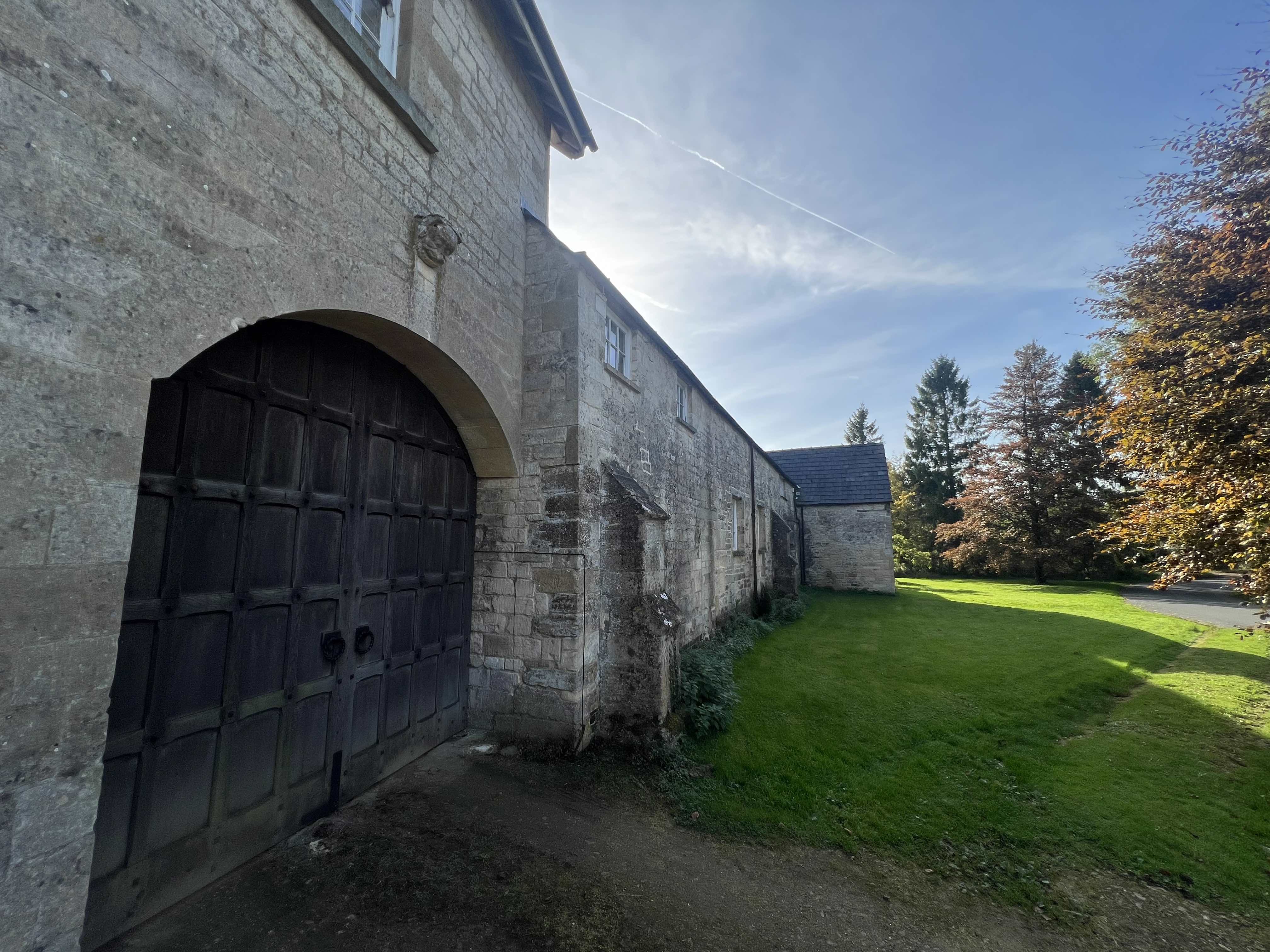
Dick WHittington
The connection with the Cubberley family and the legendary 'Dick Whittington'
The Cubberley Name
A History of the Cubberley Name
The name Cubberley is one of the oldest surnames in England, of pre-Saxon /Celtic origin and is believed to date not long after 600 AD as 'Cuthbert's Ley' (Curthbert's clearing/land); later known as 'Cubberslege'. The Doomsday book's heading of the estate is 'Coberlei', it mentions the areas of 'Coberleie', and 'Culberlege'. There are also references to 'Cubba's Ley', 'the great man Cubba', and ‘Cuthbert’, who at that time would most likely have been St. Cuthbert (AD 635-687).
The name originates from the village of Coberley in Gloucestershire, UK. The earliest inhabitants of what is now known as 'Upper Coberley', arrived in the seventh century. Monks from the parish established an estate and monastery in the year 690. Its borders encompassed the area of hilltop terrain that descended to the River Churn. Today this area is known as Coberley, pronounced 'Cubberley' (the village's name was changed from "Cubberley" in 1935). These early settlers built a chapel and the area was known as 'Cuthbert's Ley', (meaning 'Cuthbert's Meadow' or 'Land'). According to the website 'Forebears', (available at :https://forebears.io/surnames/coberly, Accessed 15 02 2022), ancient British dictionaries define Coberly as 'Culberlege', dating 1086 AD (Doomsday Book citation); 'named after a Wood or clearing of a man called Cuthbeorht'. The personal name of 'leah', 'leigh' or 'ley' was added soon after. Similar citations describe Culberlege as the 'Wood or clearing of Cúthbeorth (Saint Cuthbert).
The estate is mentioned in the Domesday Book of 1086 as "Cabelei", in the Feet of Fines of 1232 as "Cubbeleg", and in the Charter Rolls of 1255 as "Cubbelegh". These name variants relate to the ancient English names of "Cubba", and "leah", (a grove), thus - ‘the grove of Cubba's people’.
Since the Norman conquest (11th century) the name "Cubberley" and "de Cubberley", are recorded with several mutated and local spelling variations including 'Coberlei', 'Cobberleye', 'Cubberley', 'de Coberley, 'Coverlees', 'Coberly', 'Cubberly', 'Cobleigh', 'Cubberslege', and 'Cobley'.

Excerpt from the Doomsday Book
Connections between the Berkeley and the Cubberley name
In the year 1086 the largest record for "Coberleie," is recorded in the 'Domesday Book' as land given to a "Roger De Berchelai". By the thirteenth century, Coberleie was largely spelt "Cubberley". Its most recent name change took place in 1935, when the estate was renamed 'Coberley'. All name variants are linked with the manor of Coberley in Gloucestershire.
It is known that the 'Coberleie' estate existed well before the Berkeley tenure, and even before the reign of Edward the Confessor (1042-1066). Its Doomsday record runs to about 17 pages in length, and states that at the time of King Edward the Confessor, Coberleie was held and administered by ‘Dena’, a Thane (Noble Knight) of the King. The estate comprised of 10 hides (1 hide = approximately 460 acres), around eight square miles in size.
The Doomsday record also indicates 19 villans (villagers), 4 bordarii (one who held a cottage at the will of the lord of the manor), and 4 serfs (peasant farmers), living on the estate. All of these would have been bound by the lord or master of the time (Lord or Master of Coberleie).
For much of its existence, the manor of Cubberley, was owned by a branch of the Berkeley family, known as the 'Berkeley's of Cubberley'. It is speculated that this branch may have been related to the earliest Cubberleys or were a combined family at some point in their history. -the´Berkeley’ name by itself resembling some early variant spellings of ‘Cubberley’ -ancient footnote references in Domesday mention 'cow and berkelie', thus ‘Cowberkelie’.
Historical records indicate a fortified Manor House or castle stood within the grounds of Coberley, it was recorded as both ‘Cubberly’ and ‘Cow Berkeley’.
Throughout their time at Coberley, the Berkley family used the name 'Cubberley', interchangeably with 'Berkeley', always using- 'de Cubberley' (of Cubberley) in their landed titles and positions throughout the 13th-15th centuries.
Perhaps the clearest explanation of the connection between Cubberley and Berkeley is observed in ‘A History of The Barclay family’, by Charles Barclay (1924 P 12 -13). From the book its possible to ascertain the process by which Roger de Berchelai, a Norman Noble, acquired vast lands, including those of ‘Cubberley’- the estate was given to him by William the Conqueror:
“These plain statements from Domesday necessarily strike a Doomesday blow at the old traditional belief that Roger de Berchelai and his ancestors before him were lords of Berkeley from time immemorial. We cannot even claim that Roger or Ralph held any land whatever in Gloucestershire during the reign of King Edward the Confessor. All this must lead us to a somewhat singular inference,,,,, (an) extreme probability of a Norman origin for Roger de Berchelai. ,,,,, The Chronicles tell us how their estates (those of Saxon owners) were confiscated, how many of them fled abroad, their lands being granted to Norman nobles. We hear how King William deprived the Anglo-Saxons of all offices of State, and how even the Saxon monasteries were, in some cases, plundered, and the very primate, Stigand, deposed, and Lanfranc, a Milanese monk, promoted to the See of Canterbury. Freeman in his Norman Conquest points out that in the generation represented by Domesday a man’s name is an absolutely certain guide to his nationality. The names Roger and Ralph (de Berchelai) indicate unmistakably a Norman stock." -
A History of The Barclay Family, Barclay (1924 p12-13).
The Manor of Cubberley

(An 18th Century artist impression of the Manor of Cubberley)
As the UK National Archives point out, (Available at: https://www.nationalarchives.gov.uk/help-with-your-research/research-guides/medieval-early-modern-family-history/ Accessed 15 04 2022), trying to trace families by name in medieval documents is not a straightforward task. The use of surnames did not become widespread until 1300, and even then there was rarely any consistency in spelling. Moreover, surnames were not always used nor always passed from parent to child, and to complicate things further, different surnames for the same individual could be used in different contexts.
This is seen in the Cubberley name, with its numerous early spellings of 'Coberlei', 'Cobberleye', 'Cubberley', 'Coverlees', etc. Medieval documents were often translated from Latin or French and spelt phonetically according to the dialect used by the officials at the time.
The earliest references to the Cubberley name are all connected to the manor of Coberley in Gloucestershire, UK
The Earliest Cubberley and De Cubberley name Records
The origin of the Cubberley and De Cubberley name

Philip of Cubberley 1270, Rector of Cubberley Church
Records from The National archives and British History online note a 'Ralf of Cobberley' (1100-1135 ) living at 'Cobberley'. In 1171 the spelling ‘Coberley’ can be found. In 1215 the spelling changes to ‘Cobberley’.
In 1221 an 'Ernald de Coberley' is recorded. His name sometimes recorded as either 'Ernald of Coberley', 'Arnald de Berkeley', or 'Arnald Berkeley de Cubberley' (1258 to about 1264).
In 1241-1248 a 'Richard de Covelee' and his wife Matilda are recorded, as well as a 'John de Covelee' in 1248. In 1262 'Geoffry de Cubirle' appears, and reappears in 1265 thru 1269 as 'Geoffrey de Cubberlye'; in 1269 he is mentioned as the 'well-beloved Master Geoffrey de Cuber-leg' and then in 1270 as 'Geoffrey de Cobberley of Coberley'. It is interesting that 'well-beloved' is a term of endearment normally given to royal nobles.
In the same year (1270) a 'Philip de Cubberly' is recorded as the rector of Cubberley Parish Church (St Giles Church, Coberley) and a 'patron of Giles Berkeley'.
The year 1275 finds a 'Geoffrey de Cobberley', with several variant spellings of 'Cuberleg', 'Cubberley', and 'Coberley'.
The same Geoffrey de Cubberley was known to be living in Cubberley Hall in 1270. He built a chantry-chapel dedicated to Holy Trinity on tenement in the manor
(https://www.british-history.ac.uk/vch/glos/vol7/pp174-183)
A 'Ralph de Cubberley' is recorded as owning nearby land in Throckmorton, Worcestershire.
The records for both Philip and Geoffrey de Cubberley indicate the presence of Cubberleys, of some very high social standing, living at Coberley manor towards the end of the thirteenth century. It is interesting to note that these two men do not appear to be members of the Berkeley family living at the manor at this time. Moreover, according to all published family trees of the Berkeley family, there has never been a Geoffrey or Philip Berkeley of Cubberley. The assumption is that these Cubberley’s are of a separate family living on the estate towards the end of the thirteen century. Perhaps descendants of the original family of the manor, predating the Berkeley's arrival.
Geoffrey de Cubberley 1270


(Above source: Excerpts from 'Episcopal Registers, Diocese of Worcester' by Bishop Godfrey Giffard, Published 1902)
To further complicate matters, we see the previously mentioned 'Arnold of Cubberley' and 'Thomas of Cubberley’, using two different surnames throughout their history; very often they are recorded as ‘de Cubberley’, at other times, they are ‘Berkeleys of Cubberley’.
The 'Forebears website' (available at :https://forebears.io/surnames/coberly, Accessed 15 02 2022) mentions the records of the 12th of March 1377 from Winchcomb Monastery, Abbey Glouchestershire (page 412) - Letters of testimony from 'Thomas de Coburleye' :
“Nich. Karelas of Evansham, and Joan his wife, to John Almeshull and William Chabbenore transfer a 2s Cd anl' rent from a tenant in Hal Street between Thomas Cobberley and John Benne”.
Researchers state that the ‘Cubberley’ name was very often used as an alternative surname for this branch of the Berkeley family.
The Bristol and Gloucestershire Archaeological Society in: 'Transactions of the Bristol and Gloucestershire Archaeological Society' (Vol. 16 (1891-1892)
Published 1891 make this very point:
"The use of Coberley as an alternative surname was not uncommon in the family. Even in the next century, when people's names were much more settled, we find Sir John de Coberle summoned as a Juror to replace Sir Thomas de Berkele de Coberle in 1336.—Cart. Sc Fridemide, Oxon. While in 1372 (47 Edw. III., No. 55) the last Sir Thomas de Berkeley of Coberley is called in his Probatio .'Etatis Thomas de Coberley."
We see from the following list, the names of 'Cubberley' and 'Berkeley' continuously entwined from the twelfth to the fourteenth century:

List of Berkeley de Cubberley names. Excerpt from the History of The Barclay Family by Rev. Charles W Barclay
Published 1924
The Cubberley and Dick Whittington Connection
The Cubberley and Dick Whittington connection
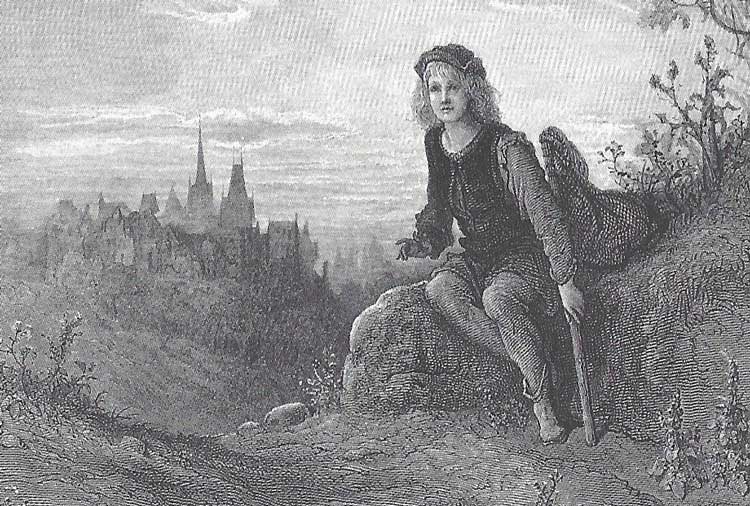
Dick Whittington one of the most famous English tales
Thomas de Cubberley, half brother of Dick Whittington
Thomas de Cubberley (1351- 1405 sometimes spelt 'Cobberleye') is very well documented. He was the son and heir of Joan (Archer born 1327), she was married first to another Thomas de Berkeley then after his death, to William Whityngton. One of her sons from this marriage- 'William de Whittington', became three times Lord Mayor of London. The same William Whittington is the legendary folklore and pantomime character from the tale - 'Dick Whittington and his cat'.
England's famous Dick Whittington folklore tale >>
Thomas de Cubberley ('Cobberleye')
Details from the Inquisition Post Mortem taken after his mother's death ( Joan Archer) in 1357:
After her death, Thomas de Cobberleye became the sole heir. [1] “Thomas de Cobberleye filius et haeres Johannae quae fuit uxor Willelme de Whityngton defuncti.” (Thomas de Cobberleye, son and heir of Joan, who was the wife of William de Whityngton, deceased).
Joan was born about 1327, the daughter and heir of Geoffrey Archer of Stoke Orchard, Gloucestershire.[1] Her age was given as being 24 years or more at the time of her father's Inquisition Post Mortem in 24 Edward III 1350. [2]
She married firstly Sir Thomas Berkeley of Coberley, Gloucestershire.[1] Her father's IPM noted the marriage,[2] as did an Inquisition Post Mortem taken after her mother's death in 1357. [3]
After his death she married William Whittington of Pauntley, Gloucestershire. [1] Thomas de Cobberleye filius et haeres Johannae quae fuit uxor Willelme de Whityngton defuncti.
Sources
1.0 1.1 1.2 History of Parliament Online, BERKELEY, Thomas (1351-1405), of Coberley and Stoke Orchard, Glos., Chilcote, Derbys. and Eldersfield, Worcs. | History of Parliament Online HOP accessed: 9 April 2022
2.0 2.1 J. E. E. S. Sharp, E. G. Atkinson, J. J. O'Reilly and G. J. Morris. "Inquisitions Post Mortem, Edward III, File 109," in Calendar of Inquisitions Post Mortem: Volume 9, Edward III, (London: His Majesty's Stationery Office, 1916), 387-394. British History Online, accessed April 9, 2022, BHO
A. E. Stamp, E. Salisbury, E. G. Atkinson and J. J. O'Reilly. "Inquisitions Post Mortem, Edward III, File 137," in Calendar of Inquisitions Post Mortem: Volume 10, Edward III, (London: His Majesty's Stationery Office, 1921), 305-320. British History Online, accessed May 7, 2022, BHO
Cubberley Family Trees
Robert Atkyns , in his book 'History of Gloucestershire (under Cubberley )' of 1712, presents one of the first published family trees showing the connection between the Berkeleys of Cubberley and the Whittington families. It does contain some inconsistencies and omissions. For example, it is known that the Thomas de Berkeley indicated here (as the husband of 'Joan, daughter of William Mansell',) had three wives, not two. Whilst Joan (more commonly known as 'Joan Archer') married William of Whittington AFTER Thomas de Berkeley and NOT before as indicated. There is no mention of some important siblings , in particular a 'Thomas of Cubberley' (who will be discussed later).

Excerpt from 'History of Gloucestershire', by Robert Atkyns (1712) showing the connection between The Cubberley family and Dick Whittington
Samuel Lysons in his 1860 book 'The Model Merchant of the Middle Ages -The Story of Dick Whittington and his Cat', also points out some discrepancies, that from official Inquisitions of 1406, Thomas Berkeley de Cubberley's wife was named 'Margaret' and not 'Alice' as named in Atkyns book (above). He presents a possible explanation:

Excerpt from 'The Model Merchant of the Middle Ages -The Story of Dick Whittington and his Cat', Samuel Lysons, 1860.
A third interpretation of the family tree is displayed in 'A History of The Barclay Family' (Barclay 1924).
In this version, ‘Margaret’ is indicated as the third wife of Thomas de Berkeley of Cubberley, with a first wife ‘Juliana’ (recorded as married 29 Sep 1364 in Cubberley, Gloucestershire, England). An ‘unknown’ first wife of Thomas de Berkeley of Cubberley is mentioned, with a ‘Thomas of Cubberley' appearing from his second marriage.

Excerpt from 'A History of The Barclay Family' (Barclay 1924)
In the above family tree, the use of the word ‘Extinct’ stands out. It is peculiar that after five centuries, such an illustrious noble family should suddenly become ‘extinct’, unless by some form of natural disaster, war or plague, for which there is no evidence. Medieval families averaged five to ten children (with a much higher life expectancy for nobles), yet in all these family trees we only ever see one offspring - culminating in one female heir. It seems likely that many siblings have been omitted from these family diagrams. What is very interesting in the above tree is the appearance of a 'Thomas of Cubberley' (not a Berkeley).
The Forebears website mentions this same Thomas Cubberley (see: https://forebears.io/surnames/coberly#meaning )
“See later citations for this Thomas Cobberley. Some modern researchers believe he may be the missing link between Berkeleys and Coberlys. A potential offspring".
The Curious History of Thomas of Cubberley born 1351
Researchers often indicate Thomas de Coberley (the son of Joan Archer and half brother to the famous Dick Whittington), as the ‘missing link’ between the Berkeley and the Cubberley family. His family story is indeed somewhat of a mystery, the clearest indication of a Cubberley being born at Coberley manor, outside of the Berkeley family line in the fourteenth century.
According to the documents (below):
'The Index library', Volume Vol. 47, Pt. 6 (1914) 1359-1413)
Author : British Record Society
Published in 1914
and
'Inquisitions Post Mortem, Edward III, File 235 '
(Pages 255-272
Calendar of Inquisitions Post Mortem: Volume 13, Edward III. Originally published by Her Majesty's Stationery Office, London, 1954)."
we see an inquisition of proof of age taken for Thomas de Cubberley born of Joan Archer in 1373.
"Proof taken at Cobberiore, out ... an Edward I1 C1313-41, before the abovesaid escheator. [John Pope, aged 6o, says the said Thomas was 21 on Monday next after the Feast of St. Dennis, 46 Edward III [1372], and was born at Cobberleye and baptized in the church of that town, and this he remembers, because he was in the said church when the said Thomas was baptized, burying William Pope, his father. Walter Levyot, aged 56, remembers the date of the baptism, because on that day he set out for St. lago [sanctum Jacobum]. William Haselton, aged 54, remembers the date, because he married his wife, Maud de Stowe, on the same day. John Monemouth, aged 52, was making an account with the proctors of the said church on the day of the said baptism, with regard to the repairs thereof. John Heved . . ., Thomas Gesanl, and John Ryseley remember the date, because on that day they appeared before the King's Justices of Assize at Gloucester, when John Botiller, uncle of the said Thomas, recovered seisin of a message and carucate of land in Cobberleye by virtue of an assize. Inquisitiones Post Mortem. 75 John Clement, Walter Bronyng, and Robert Russell were at Gloucester in the train of Thomas de Cobberleye, father of the aforesaid Thomas, when news was brought of the birth of his said son. Chan. Inq. p.m., Ser. I, 47 Edward III, ist Nos., No. 55. New reference, Chan. Ing. p.m., Edward III, File 235


Joan was the second wife of Thomas Berkeley. At the christening, the Child is baptised ‘Thomas of Cobberleye’ and not ‘Thomas Berkeley’, whilst the father is mentioned as ‘Thomas of Cobberleye’ and not ‘Thomas Berkeley’.
It’s inconceivable that the King's inquisitor, with the information and documents in front of him at the time, should confuse both the surname of the child and the surname of the father, especially considering Thomas Berkeley would have been regarded as one of the most important men in the entire county at the time. It’s also inconceivable that so many witnesses to the christening (at least a dozen) should also confuse the names.
The fact that there were so many witnesses on the day seems strange in itself, given the tiny size of the church and parish. It seems anyone who was anyone, had a reason to be in Coberley on this day, all witnessing the Christening!
So we can conclude from the official records and witnesses that a Thomas of Cobberley was born, who does not appear to be the son of Thomas Berkeley.
In another Inquisition of 1364, we find a different Thomas of Cubberleye present as a witness in a will. Could this be the father of the same 'Thomas of Cubberleye' 1351, mentioned at the baptism, discussed above? The two Thomases cannot be the same person, as the Thomas born in 1351 would have been just thirteen yeas of age at the time; too young to be an official witness:
''Abstracts of Inquisitiones Post Mortems for Gloucestershire, returned into the Court of Chancery during the Plantagenet period' (Volume 6) Author : Great Britain. Court of Chancery 1865.

Thomas COBBERLEYE witness 1364- possibly the father of Thomas of Cubberleye 1351
Rev. Charles W Barclay in: 'The History of the Barclay Family', (1924), acknowledges the separateness of Thomas of Cubberley:
"THOMAS OF CUBBERLEY
came of age in 1372, his "proof of age" showing that he was Born 1351. born at Cubberley on the day of St. Dionysius- October oth
-in I351. With respect to this Thomas of Cubberley, he is nowhere designated of Berkeley".
When discussing Thomas Berkeley of Cubberley, he refers to Joan Archer, (the mother of Thomas of Cubberley) as: “his second wife and her boy having been provided for by the entail of Stoke Archer” It is noticeable that he doesn't use the words ‘their’ boy, i.e. the son of Thomas Berkeley and Joan Archer.
To further illustrate the separation of Thomas of Cubberley from the Berkeley line, it is known that on the death of his mother (Joan Archer), Thomas Cobberleye was the sole beneficiary and inheritor of his mother's estate-Stoke Archer (a large manor in Gloucestershire). Oddly, the estate was not shared with any of his other half brothers (from the marriage of Thomas Berkeley to his first wife). It would have been expected that Thomas, being the youngest child, would become the last in line to inherit the estate; certainly not the first, unless he was of an entirely separate family line.
See images below from-'Inquisitions Post Mortem, Edward III, File 231' and
Pages 195-214 Calendar of Inquisitions Post Mortem: Volume 13, Edward III. Originally published by Her Majesty's Stationery Office, London, 1954.


The question arrises therefore of what became of Thomas of Cubberley?
Unfortunately most researchers and genealogy websites completely overlook him. They mistake him for 'Sir Thomas Berkeley of Cubberley', born, according to The Rev. Charles W Barclay in 'The History of the Berkeley family', eleven years previous in 1340. The same author correctly indicates ‘Thomas of Cubberley' in the family tree but with an unknown birthdate and supposed death date of sometime before 1400 (indicated ‘s.p. before 1400’ on the family tree).

From 'A History of The Barclay Family' (Barclay 1924)
However, we do know with certainty the birth date of Thomas of Cubberley. According to official documents published at the time of Henry 3rd and still available today in the British library, he ‘came of age’ in 1373, meaning Thomas was at least 21 years of age on that day.
Other documents exist showing his involvement in various court cases a few years after this date.
Some researchers speculate that the lack of extant marriage or death records for Thomas of Cubberley points to a probable life without wife or children, and that the tomb of a young unnamed youth in Coberley church, could be his. This seems quite a tenuous hypothesis. The absence of such records does not mean he was never married, nor without children. In the same way, the absence of a death certificate does not indicate he didn’t die!
Thomas of Cubberley-the real Sir Thomas Berkeley of Cubberley 1351?
To confuse matters further, Sir Thomas Berkeley of Cubberley died in 1405 in possession of the Manor of Stoke Archer- and in his will, he passed it onto his daughters Alice and Margaret-Alice eventually becoming the sole heir of the Cubberley estate. This is quite a revelation, it raises the very profound question as to when and by what mechanism did Sir Thomas Berkeley of Cubberley gain possession of the estate of Stoke Archer? As we have already seen, Joan Archer, in her will, did not leave her estate to him, but to her son 'Thomas of Cubberley'.
There can only be two solutions to this question:
1. That the first Thomas of Cubberley died and left the entire estate to his half brother-Thomas Berkeley of Cubberley and that the unnamed tomb of a young man in Cubberley church is that of Thomas Cubberley. This is the solution put forward by Charles W Barclay (hence the supposed death date indicated 'died s.p. before' on his family tree). The weakness with this explanation is that there is no death record for Thomas of Cubberley, no inquisitions or record of a will bequeathing the estate to his half brother, and no witnesses. Given the size of the estate, the amount of witnesses discussed previously at Thomas of Cubberley's baptism, it seems ironic that no one this time around witnessed his death nor the execution of his will. As for the unnamed tomb of a young male youth at Cobberley church, it seems too small to be that of Thomas Cubberley's, i.e., the tomb of a man, who we know through the evidence of inquisitions and court cases, to be at least of middle twenties in the year 1374. In medieval times, this age would be consistent with a man in his prime, not his youth. There is also a tomb of an unknown female child lying near his, this similarly does not seem to connect with any known members of the family at this time.
2. The second explanation put forward by some historians, including the early Eighteenth century historian Robert Atkyns, is that Sir Thomas Berkeley of Cubberley is actually 'Thomas of Cubberley'. They state the birth date For Sir Thomas as 1351, which would indeed make him the same person. We known Thomas of Cubberley 'came of age' at the King's Inquisition of 1373 (discussed previously). If we do the maths, i.e., we take the year 1373, deduct his 'coming of age' period (21 years), it gives a birth date of 1351. Thus Sir Thomas Berkley of Cubberley has exactly the same birth year as Thomas of Cubberley, and inherited exactly the same estate (Stoke Archer) that was left to Thomas Cubberley by his mother Joan Archer.
This looks to be by far the most plausible explanation, the issue with it is that the names of the two Thomases differ. The ‘Berkeley’ name would have needed to have been altered slightly - turning 'Thomas of Cubberley' into Thomas ‘Berkeley’ of Cubberley.
No one can be certain of a correct explanation, but if the latter is the case, it means the entire family line from Alice de Berkeley of Cubberley onwards, descends from a Cubberley and not a Berkeley, which might come as quite a shock to modern day genealogists!
The Cubberley family connection with the Dukes of Chandos
Cubberley and Brydges and Brugge connection
Cubberley used as an alternate surname to Brydges and Brugge
From around 1605, the Berkley and Cubberley names separate, with Alice, as the tree above states, marrying into the Brydges family. The Cubberley name then becomes permanently detached from the Berkeley name. Seen in this light, the use of the word ‘extinct’ is correct, since the name 'Berkeley de Cubberley' is no longer recorded in any documents after this time.
The Cubberley name was also used as an alternate surname to the Brydges family through Alice Berkeley of Cubberley’s marriage into the Brydges family (also known as the Brugge, Bruge, Bridges and Chandos family).
In 1375 Thomas de Cobberleye’s married Margaret Chandos. Their Daughter Alice became the sole heir of Coberley Manor. Alice was married firstly to Thomas Brydges (Bruges) then after his death, to John Browning. From her first marriage, ‘Gyles Coberley’ was born. Gyles later became known as: 'Giles De Brugge of Cubberley, 4th Baron Chandos' (c. 1396-1466). He was born in Cubberley, Gloucester, England.
Giles became father to Thomas Brugge, (5th Baron Chandos). Thomas' son, Giles Brugge of Cubberley, (6th Baron Chandos 1462-1511), held the office of High Sheriff of Gloucestershire in 1499. He took part in the Battle of Blackheath, also known as the 'Battle of Deptford Bridge' on 22 June 1497, for which he was knighted for valour.
The History of the Duke of Chandos >>
:
Giles Brugge de Cubberley, (6th Baron Chandos 1462-1511) is forefather to the following:

Giles de Brugge of Cubberley 6th Baron Chandos- Knight of the Battle of Blackheath
Last Will and Testament of Giles Brugge de Cubberley (6th Barron Chandos)
As all the Berkeley's of Cubberley before him, Giles de Brugge of Cubberley was buried in Cubberley Church (St Giles Church, Coberley, Gloucestershire).
Details of the will are recorded in 'Testamenta Vetusta': illustrations from wills, of manners, customs, &c., from the reign of Henry the second to queen Elizabeth; by N.H. Nicolas (1826).
"Giles Bruges, Knight’, dated 19 November 1511
My body to be buried in the Chapel of Cobberligh.
To my daughter Anne cc l. and my best chain of gold, which I will be kept by my brother Henry, until she shall marry;
Thomas and William my sons;
I will that the c l. which was promised with the marriage of my daughter Katherine, be paid to Richard Pole, Esquire, so that he leave such lands to his son Leonard Pole as he promised;
to John, my son, all my apparel;
Ursula my daughter.
And I constitute Henry Brugges, my brother, and Edmund Tame, Esquire, my executors.
Proved 18 February, 1511-12.''
Many modern day genealogy websites reference 'Cubberley' as the alternate surname to the Brydges and Brugge family. A ‘Henry Cubberley’ also known as ‘Lord Brydges Van Cubberley,’ and 'Henry Brydges', born 1465 at Cubberley Manor is often cited.

Henry Cubberley 1465-1538 - Geneanet. (n.d.). Geneanet: Your family history. [online] Available at: https://en.geneanet.org [Accessed 14 Nov. 2022]
The Independence of the Cubberley name
De Cubberley becomes detached from Berkeley and Brydges
After the marriage of Alice Berkeley de Cubberley to Thomas de Bruges, the estate continued to be used by nobles and royalty. Elizabeth, wife of Henry VII, stayed at Coberley Court on 4th August 1502. Henry VIII and Anne Boleyn rode to Coberley on 2'nd August 1535 from Gloucester. In 1651 King Charles II was known to have found shelter here after his defeat at the Battle of Worcester.
We know from the earliest birth and death certificates of other Cubberley families living within the estate at around the same time. For example, a John Cubberley was known to be living there in 1566, other families were known to be living close by in Throckston and Cowley (on the very edge of the Cubberley estate).
Marriage and death records began in 1538 in England, following the Church of England's separation from Rome, under Henry VIII. It was agreed that each parish priest should maintain a record of every baptism, marriage, and burial that took place under their care.
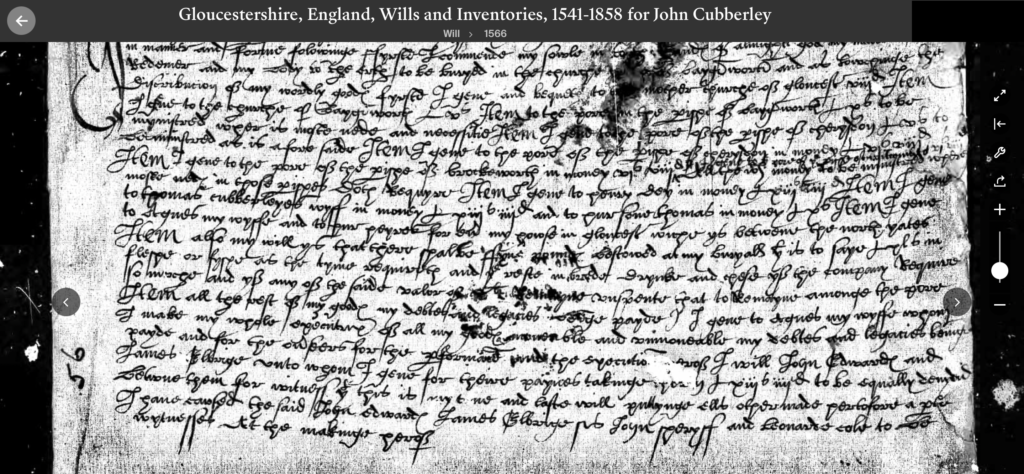
The Will of John Cubberley 1566
Other Cubberley descendants were known to be living a few miles further north, in the town of Cheltenham and the hamlets of Winchcombe and Birlingham. By this time, the name ‘Cubberley' was used independently of 'Brydges' or 'Brugge'.
The Cubberley Martyrs

Around this time, history reveals the rather harrowing accounts of the martyrdom of John and William Cubberley, who under the reign of Queen Mary Tudor (1553-1558), paid the ultimate price for their religious beliefs. Both were living on the boundary of the Coberley estate, just three miles north in the town of Cheltenham.
If things weren’t bad enough for the practice of religion under the reign of King Henry VIII, for Protestants under Queen Mary of Tudor, things became even worse.
In 1534 the Act of Supremacy had been introduced by Henry the VIII. It declared the King to be the supreme head of the Church on earth, replacing the pope. To accommodate the structure, a new church was created-the Church of England. Refusal to accept the Act was considered an act of treason, punishable by death.
Twenty years later and Queen Mary, his daughter, the aptly named ‘Bloody Mary’, came to the thrown. She completely reversed the decision of her father and once again converted England back to Catholicism, the pope as before, returned to the head of the church.
Mary and her Bishops were particularly brutal. Refusal to accept the new order was once again an act of treason. To even criticise it, was punishable by burning at the stake.
Two hundred and eighty individuals were executed in this way; William and John Cubberley were two of these. Their heresy was to speak against the practises of the Roman Catholic Church and to have denied the pope's supremacy.
John Coberley, of Cheltenham, was burnt In Salisbury in March 1556.
In the case of William Cubberley, more details are recorded. He was was tried along with two others,
John Maundrel and John Spicer. They became known as the Salisbury Martyrs.
They were arrested and interrogated by Salisbury's bishop, Dr John Capon, and his chancellor, William Geffrey.
Sentence was passed on 23’rd of March 1556, and, the following day, the three men were "brought to the place of Martyrdome" Where they knelt and prayed, before being chained to the stakes and burned to death.
According to the ‘Salisbury Journal’ Bates, L. (2006) Burned at the stake for Heresy, Salisbury Journal. Available at: https://www.salisburyjournal.co.uk/news/706756.burned-at-the-stake-for-heresy/ (Accessed: 20 May 2023).
the Bishop and his chancellor approached the task of burning the three with “apparent zeal”.
William Coberley seems to have met a particularly terrible end. John Foxe, recorded all the details in his ‘Actes and Monuments’, popularly known as the Book of Martyrs.
"Being somewhat learned," Foxe reported,
"and being at the stake was somewhat long a burning as the wind stood
: after his body was scorched with the fire, and his left arm drawn and taken from him by the violence of the fire, the flesh being burnt to the white bone, at length he stooped over the chain, and with the right hand, being somewhat starkened, knocked upon his breast softly, the blood and matter issuing out of his mouth. Afterward, when they all thought he had been dead, suddenly he rose right up with his body again. And thus much concerning these three Salisbury martyrs.”
Available at: University of Oxford
https://ota.bodleian.ox.ac.uk/repository/xmlui/bitstream/handle/20.500.12024/N20568/N20568.html?sequence=5&isAllowed=y
And:
An Universal History of Christian Martyrdom, Being a Complete and ..., Volume 8
By John Foxe 1839
The American Cubberleys
By the end of the 17th century, a divide appeared in the family-one group of Cubberleys moving to America, the other remaining in the Birlingham area.
See: 'The Cubberley Family' website http://mail.cubberley.com
According to the 'Dictionary of American Family Names'. See: https://www.oxfordreference.com, James Cubberley emigrated to America, arriving on Staten Island in 1714 aboard the ship 'The Shield' from Hull, England, settling in Burlington, New Jersey. He is likely to be the forefather to all the American 'Cubberley', 'Coberley', or 'Cuberly' families living to this day. James Cubberley, also known as 'James Stelle Cubberley', was born in Birlingham Gloucestershire, England in 1690 and died in Burlington USA in 1754.
He would also be a relation to Ellwood Patterson Cubberley, who in 1898 became Executive Head of the Stanford Education Department of Stanford university California. Ellwood established The ‘Cubberley library’ that still exists today.
See: ‘Stamford Libraries’:
https://library.stanford.edu/libraries/cubberley-education-library
The English Cubberleys of Birlingham continued living in Worcestershire for a further 100 years before relocating to a number of the key developing industrial hubs, such as Birmingham, Swindon, and London.
James Stelle Cubberley The First American Cubberley
James Stelle Cubberley 1690-1754. His Will and Marriage Certificate


Summary and Recent Years of the Cubberley Estate
De Cubberley-One of the oldest names in England
To summarise
It is known that the manor of Cubberley predated the Berkeley family's arrival and is recorded in Doomsday (1086 AD). Records dating back just after 600 AD make the surname Cubberley or De Cubberley one of the oldest family names in England.
It is know that some 'Cubberley’s' coexisted with a branch of the Berkeley family at the Manor of Cubberley (1086-1186) and that ‘Cubberley’ was used as an alternate surname (so too, in connection with the 'Brydges' / 'Brugge' family).
Some historians postulate that the 'Berkeleys of Cubberley', 'Brydges' and 'Cubberleys' are all branches of the same family tree, and any later than 'Geoffrey and Philip of Cubberley' (1270), and it is not possible to separate them. Sometimes the family went by the surname of 'Berkeley of Cubberley', sometimes 'Brydges of Cubberley', sometimes 'De Cubberley, and sometimes, Cubberley!
As well as being the origin of the name, Coberley manor, in its more than one thousand year history, has welcomed noble families, politicians, Kings and Queens. The families of Cubberley were known for their dedicated service to their community and country.
Many generations of Berkeleys of Cubberley and Brydges of Cubberley were knighted for bravery in military campaigns, and rose to prominence in politics and the clergy.
It is known that the family were pious and charitable,
A charming nineteenth century short story is still in print today:
‘Coberley Hall: A Gloucestershire Tale of the Fourteenth Century’ (1 Jan. 1824)
by Robert Hughes,
The book is a love story about the lives of Alice Berkeley of Cubberley and Giles Brydges. It depicts life at Cubberley, and other nearby manors. Through the book we learn of the manor and grounds, the people who lived there, of splendorous banquets, music and art. Although a work of fiction, it gives insight into daily life at Coberley in the 14’th century.
In 1720 the Howe family took possession of the Cubberley estate, but by 1790, it had fallen into such disrepair that the decision was taken to demolish it. The stones from the Manor were used to build local houses and foundations for the village road. Today Coberley is a beautiful hamlet in the picturesque setting of the Gloucestershire, English countryside. It is completely unspoilt and probably looks much the same as it did a thousand years ago.
The outer walls of Cubberley manor, lake and some ruins still remain. Coberley parish church (St Giles Church) still exists in the centre of the grounds of the old Manor. Inside the church, the tombs of Sir Thomas de Berkeley de Cubberley (1289-d.1365) and his wife Lady Berkeley de Cubberley (d. 1369 ) can be found. The heart of Giles Berkeley de Cubberley is also buried in one of the walls of the Church and a mound on the southern boundary marks the site of the burial of his horse ‘Lombard’.
For those wishing to see a part of England at its unspoilt best, or to pay a trip to the ancestral home of one of the oldest surnames in England, the village of Coberley is well worth a visit.
The feudal "de Cubberley" name and hereditary title exist to this day. They are held by Lord George and Lady Olga de Cubberley.